With potential school closures on the horizon, all eyes are on DPS. The district has a long and complicated history within Denver, and each school tells a story. One of the schools on the list for possible closure is Castro Elementary in Westwood. So, who was Castro?
Richard T. Castro was a born and raised Coloradan who lived a life of service. Before his death at the age of 44 in 1991, he was elected to state office, worked under Mayor Federico Peña, and became a foundational figure within the Chicano Civil Rights Movement. He was also a champion of marginalized youth and their right to an education.
Chicano Civil Rights Movement
While in college, Castro worked as a street outreach worker serving young people on the city’s Eastside; he was also co-founder of the Westside Coalition, a group formed to address the issues of Chicanos and Latinos displaced from their Auraria community. But this work also put him at odds with others who were organizing in the same sphere – he survived being shot in the neck by a member of Corky Gonzales’ Crusade for Justice and an unattributed bombing of his neighbor’s house was thought to be meant for Castro.
Political Office
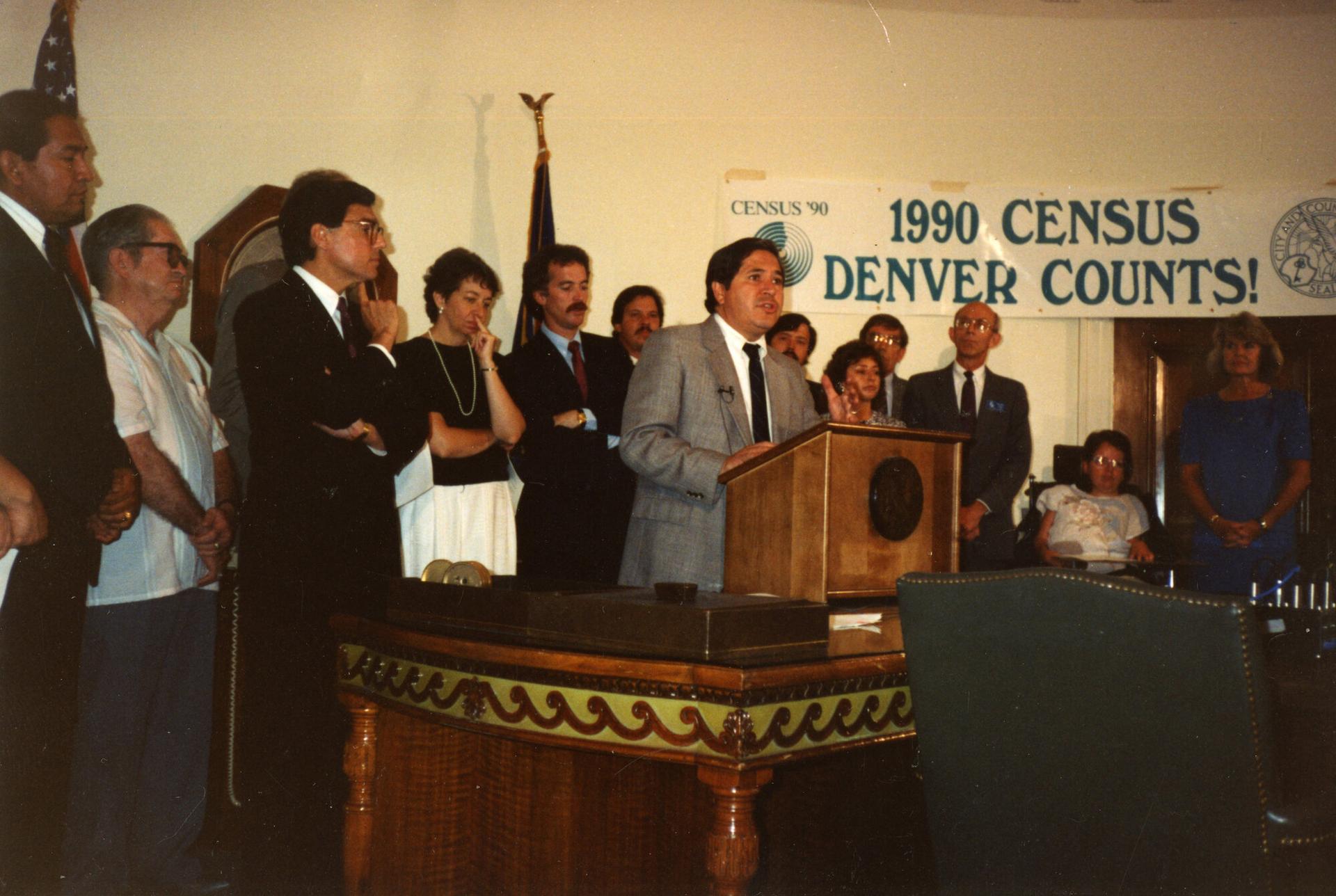
At the age of 25, he was elected to represent Denver’s District 6 in the Colorado State Legislature and served five terms. Peña later appointed Castro to run the Agency for Human Rights and Community Relations. Politically, he devoted his time to addressing gerrymandering and its impacts on marginalized communities, advocating for Denver’s Equal Protection Ordinance, and worked to strengthen representation of Chicanos and Latinos in local politics.
Commitment to education
Along with a brief term on the DPS board, Castro was a professor of what would become the Chicana/o Studies program at MSU Denver – a school on the Auraria Campus, the very place where he began his community work as an advocate for the displaced Westside neighborhood. Throughout his life, he advocated for equal educational opportunities for Chicano and Latino students, supported them as a counselor and educator at MSU Denver, and rooted his advocacy in education as a tool for liberation.
This is just a short summation of Richard T. Castro’s short life and prolific impact on Colorado – special thanks to the Denver Public Library, MSU Denver, the Colorado Virtual Library, Latin Life Denver, and the Denver Post for being excellent resources.