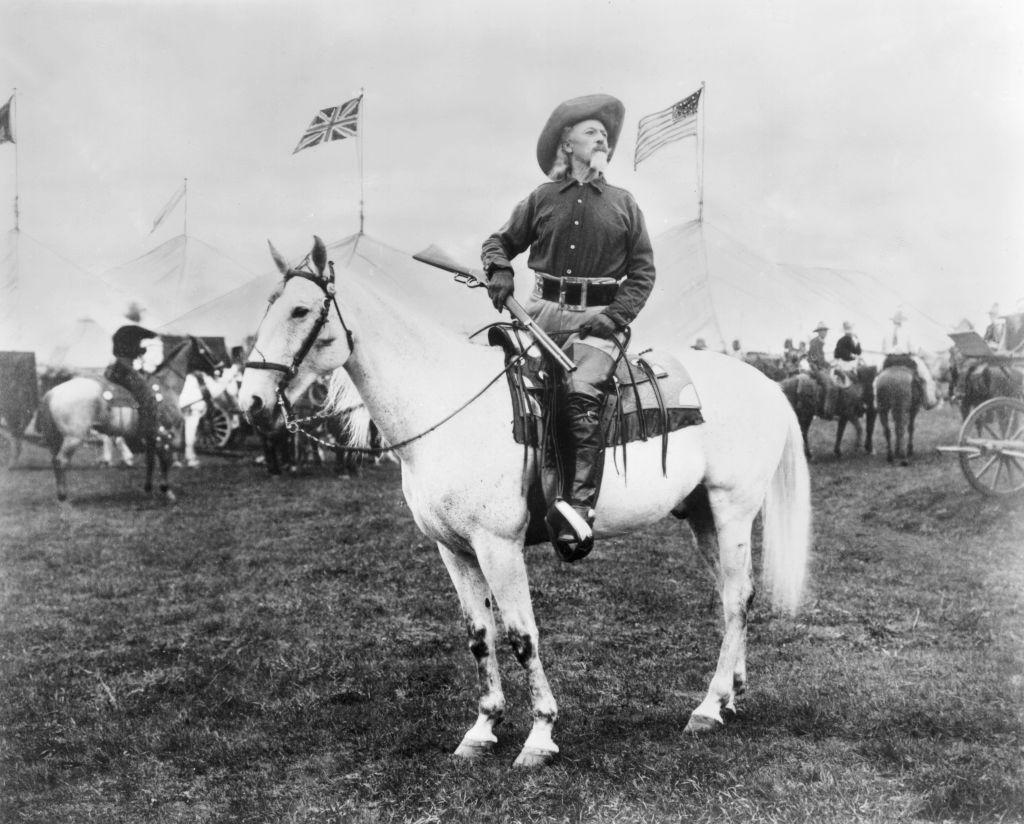
Perhaps the most renowned name on Colorado’s short list of historic celebrities is the one and only William F. Cody — aka Buffalo Bill.
Who Was Buffalo Bill?
Throughout his 70 years of life, Cody was a cattle herder, a wagon train driver, a fur trapper, a gold miner, and an army scout — but most famously, he was a showman staging grandiose reenactments of life in the Wild West across the country and even enjoyed a stint in Europe.
A self-styled symbol of the Wild West, Buffalo Bill died in Denver in 1917 and was buried atop Jefferson County’s Lookout Mountain. The City of Denver-owned Buffalo Bill Museum & Grave has been touted as a badge of honor for the Mile High City ever since. And even though city officials are shuttering the museum’s controversial restaurant and gift shop at year’s end, at least we can always claim his final resting place. … Or can we?
Where Is Buffalo Bill Really Buried?
The official narrative told at the museum says that Cody told close friends and family that Lookout Mountain, with its glorious views of the plains, should be his final resting place. So when he died at his sister’s Denver home in 1917, his body was buried where the museum stands today, to be joined by his wife a few years later.
But there’s another story out there that suggests being buried in Colorado was never Cody’s wish, but rather a coup by Denver city officials to turn his legacy into a tourist attraction.
According to some lore, Cody had actually hoped to be laid to rest in Cody, Wyoming, a town that he founded in 1896. The story goes on to allege that two of Cody’s Wyoming friends schemed with undertakers to swap out Cody’s remains. If it’s to be believed, Cody truly rests in a secret location on Cedar Mountain outside of his namesake town, and all that is to be found on Lookout Mountain are the remains of an unfortunate doppelgänger.
But as the community today reconsiders the historic figure’s controversial past, and the future of the museum hangs in the balance, perhaps we’ll never really know the truth.
👉 Learn more: Hear the whole story from museum employees at a graveside talk on Aug. 28, from 11:30 a.m.-2:30 p.m., at the Buffalo Bill Memorial Museum and Grave.