Several decades ago, Denver began rehabbing vintage movie palaces like The Bluebird, The Ogden, and The Gothic, turning them into enduring and beloved music venues. Still, some of the city’s most iconic architectural entertainment gems have been lost to our ever-evolving growing pains — gems like the Aladdin Theatre.
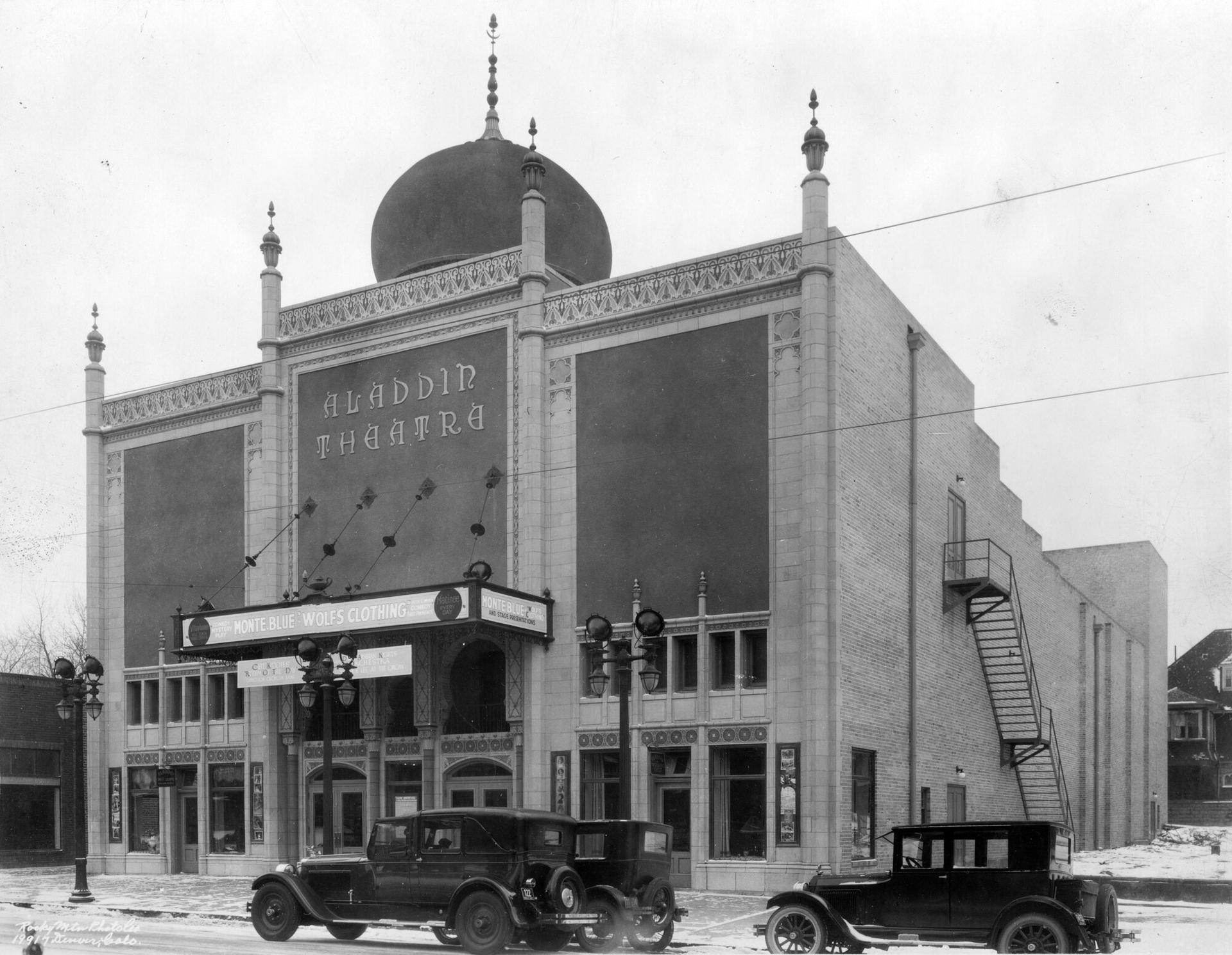
Opened in 1926 on the southeast corner of Colfax Avenue and Race Street, the 911-seat Aladdin Theatre’s palatial interior entertained Denverites with films, plays, and concerts. Though it began life in the silent film era, the theater was quick to move to “talkies,” screening early movies that used synchronized music, dialogue, and sound effects like “Don Juan” and “The Jazz Singer.” Behind the movie screen was a full stage that was also used over the decades for live theater performances.
In 1984, after more than 50 years on the strip and a contentious fight for preservation, the Moorish arches and onion dome were demolished. Plans for the massive condo complex set to replace the theater never materialized. There’s no trace of the Aladdin left at 2000 East Colfax Avenue today (unless you count the nearby liquor store named in homage to the theater), just a Walgreens and its massive parking lot. But it’s not hard to look down the glorious Colfax corridor and imagine what it must have been like when Denver’s most infamous strip was alive with neon and dream-like architecture such as that of the Aladdin’s.
Special thanks to Cinema Treasures, Denverite, and Karl Christian Krumpholz (via Westword) for additional research and information.