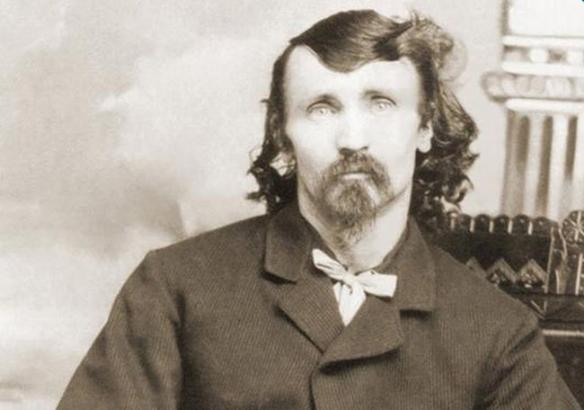
One hundred-fifty years ago, Alfred Packer began a wild, grisly journey into the San Juan mountains that would eventually cement him in Colorado history. Known today as the “Colorado Cannibal,” Packer has remained a key character in local lore and legend for a century and a half, inspiring 5Ks, festivals, films, TV specials, and even a cookbook.
In fact, this Saturday, Dec. 14, Denver Film’s Scream Screen series is hosting a special showing of “Cannibal! The Musical,” a low-budget comedic production that was written/directed by and starred Trey Parker (yes, that Trey Parker of “South Park” and Casa Bonita fame) during his time as a student at CU Boulder in 1993.
Intrigued? This is the story of the "Colorado Cannibal."
A Grisly Tale of Desperation
Alfred Packer (sometimes spelled Alferd), born in Pennsylvania, made his way to Colorado in the late 19th century. Like many young frontiersmen of that era, he was lured by the promise of adventure, gold, and new horizons. What makes his story different though, is an ill-advised 1874 expedition into the wintery San Juan mountains that began with six eager gold-hunters and ended with only one man left standing — and a whole lot of concerning questions.
When 31-year-old Packer emerged from the frozen wilderness two months after the start of his journey without his five fellow travelers, he shared a tale of being abandoned by his companions, claiming not to know what happened to them. But when authorities began poking holes in his account, Packer’s story changed.
He recounted the details of the men dying one-by-one from hunger and exposure to the harsh elements. Starving, the group resorted to eating each of their fallen compatriots for survival until Packer was the only man left. But when the bodies of the five others were discovered a few months later, the physical evidence didn’t support Packer’s version of events.
Victim … Or Cold-Blooded Killer?
Rumors soon began to circulate that Packer murdered all of his fellow travelers in cold-blood and the name of cannibalism. In his defense, Packer maintained that four of the men were already dead when he ate them. The fifth, he said he killed in self-defense. Nonetheless, he was convicted of their murders in a Lake County Court at the tailend of 1874. (Cannibalism is technically not a federal crime.) But before he could be sentenced, Packer escaped custody and lived on the lam for the next nine years.
He was eventually recaptured in 1883 and sentenced to death, but was spared on a thin technicality. When he was originally convicted, Colorado was still a territory — it didn’t become a state until 1876. His 1883 death sentence was founded on state law, and thus overturned by the Colorado Supreme Court in 1885. Packer was retried the following year and found guilty of manslaughter. He was sentenced to 40 years in the state penitentiary in Cañon City.
In 1901, Packer’s name returned to headlines when The Denver Post published a series of editorials questioning his guilt. The articles prompted enough publicity and speculation that then-Governor Charles S. Thomas granted Packer’s parolement after serving less than half of his sentence.
Upon his release, Packer led a quiet life in Littleton, where he handcrafted dollhouses, told tales of the Wild West, and maintained his innocence until his death in 1907.
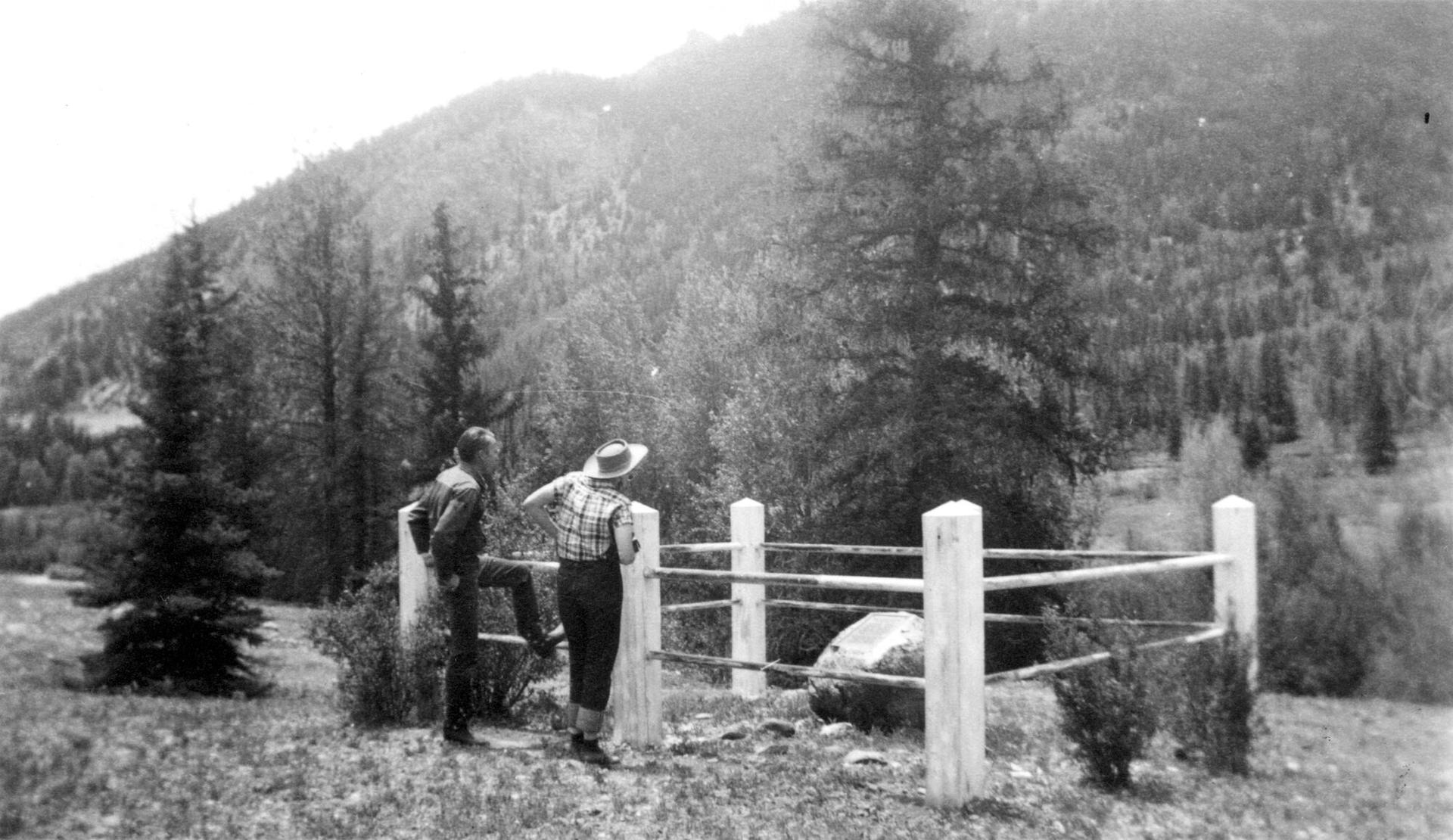
Two visitors pictured at “Cannibal Plateau” in 1942, the gravesite of Packer’s five dead prospecting companions outside Lake City, Colorado. (Denver Public Library Special Collections, X-60)
A Truth Buried By Time
What really happened 150 years ago on that fateful winter expedition will likely never come to light. But speculation continues to swirl to this day. In 1989, when the bodies of the five dead men were exhumed and re-examined using more modern forensic technology, the results indicated homicide. But an investigation in the 1990s following the discovery of Packer’s pistol conversely proclaimed his innocence. Yet another deep dive on the case in the 2010s by a true crime historian left many to believe Packer really did murder all five men.
Even stories about Packer’s life post-prison have developed their own legs — like how he became a vegetarian later in life because he could no longer stand the taste of meat, or how Ripley’s! Believe It or Not! claims to have Packer’s mummified head in its collection.
Travelers passing through Lake City used to be able to visit the gravesite of the dead men. A large road sign declaring “Alferd Packer Massacre Site” led curious passersby to the spot where the remains are reported to have been buried together in a single wooden box. The location is now closed to the public. Packer currently rests in the Littleton Cemetery.
Reporting from the Denver Gazette, History.com, Denver7, and History Colorado helped inform this article.