
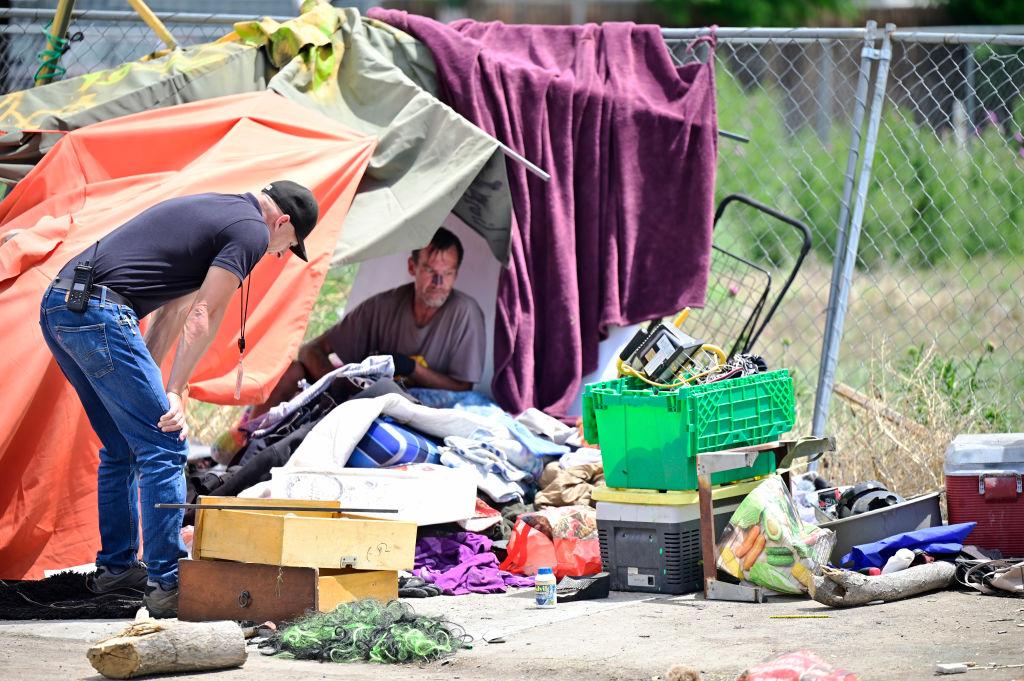
In the wee morning hours of Tuesday, January 23, the City of Denver conducted its annual Point in Time Count — a method used by the city’s Department of Housing Stability to get an idea of how many Denverites are currently experiencing homelessness. Here’s how it works.
The Actual Counting
The city deploys 25 two-person teams to walk the streets literally counting the people living outside and staying in homeless shelters. How can they be sure they count everyone? They can’t. But they do their best, so it’s a rough estimate. The numbers are also only reflective of a single night in January.
What Counts as ‘Homeless’?
Per the parameters set by the federal Department of Housing and Urban Development, the Denverites included in the count may fall under different terminology depending on their situation.
- People staying with family or friends don’t qualify as unhoused and are not included in the count.
- People living on the streets in sanctioned and unsanctioned encampments are considered “unsheltered.”
- People staying in shelters run by homeless service providers are marked as “experiencing homelessness while living in an emergency shelter.”
- People living on government-run campuses (like Denver’s tiny home micro-communities) are considered “sheltered” …
- … BUT people living independently in tiny homes or sheds are “unsheltered.”
What Happens With the Data?
In the week following the count, about 10% of the people tallied will be surveyed about their lives. The number will also inform the city’s housing efforts, like Mayor Johnston’s next House1000 initiative.
- Something to consider: Citizen status is not considered in the count, so the tens of thousands of migrants who’ve recently arrived in Denver and have no place to go will likely have a significant impact on the survey’s results.