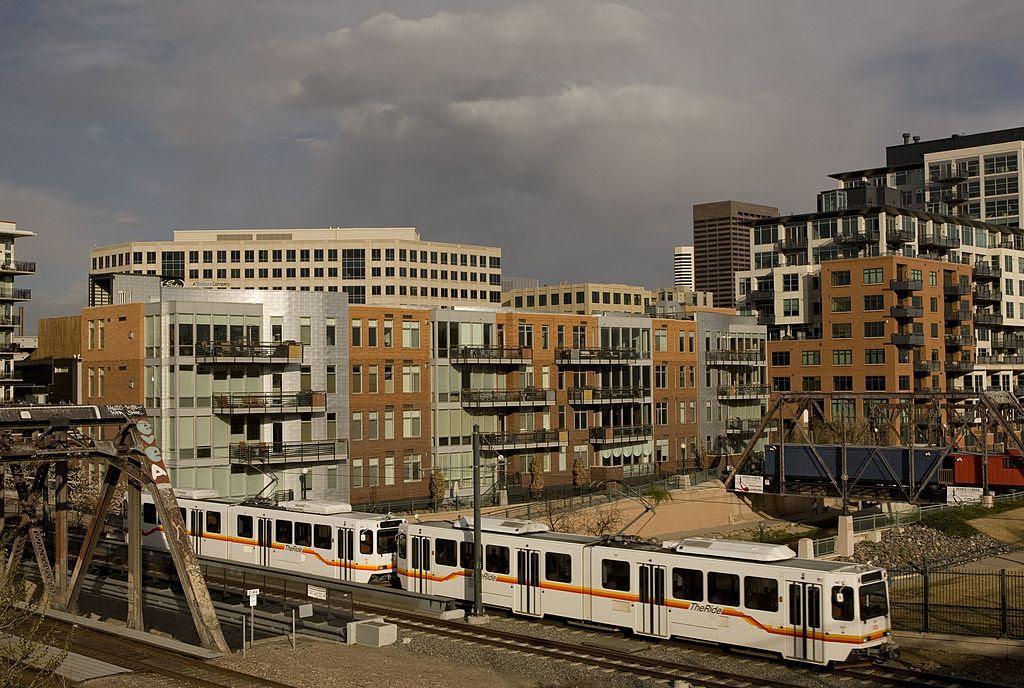
Colorado lawmakers are currently considering a new bill that would facilitate denser construction of apartments and condos near rail lines and high-frequency bus routes in Front Range cities — a top priority for Governor Jared Polis. While the bill offers financial incentives for municipalities that choose to embrace higher density neighborhoods, controversially, it could also take away highway funding from cities that don’t participate.
In other words, the measure would force strongly encourage local governments to rezone for more transit-oriented development, also known as TOD, or risk losing funding for other, more car-centric developments. TOD is a hot topic in the legislature — so to better understand the implications of this bill, you first need to understand TOD.
What is Transit-Oriented Development?
To put it simply, transit-oriented development is when dense housing options (think apartment buildings and condos) are built around public transit in a way that makes using it easy and safe. It’s kind of the opposite of suburban neighborhood building and planning, which focuses on prioritizing cars as the main form of transit.
Why Build TOD?
Just some of the benefits to TOD include easing traffic congestion, reducing carbon output, creating housing options that don’t require residents to own a car, and creating neighborhoods that are more easily accessible to people of all abilities. Basically, TOD centers a pedestrian’s experience in a community, instead of prioritizing cars.
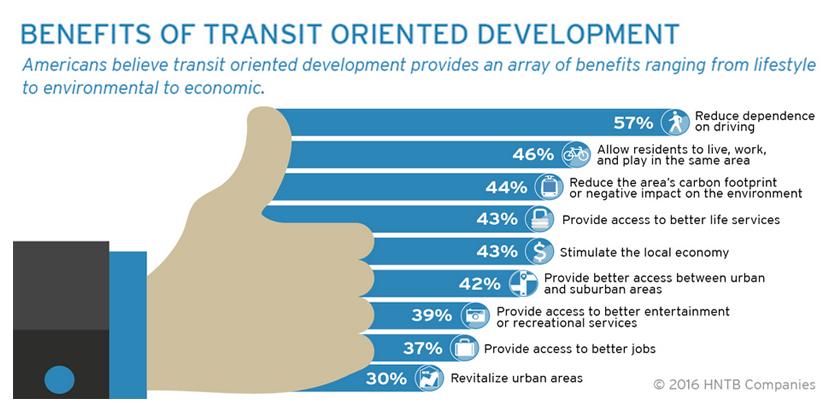
Why support transit-oriented development? (Credit: Transit Oriented Development Institute)
Where Does Denver Stand on TOD?
TOD requires cities, public transit agencies, and both public and private developers to work together to create communities that prioritize buses and trains, biking, and walking or rolling as forms of transit. While Denver still has quite a ways to go when it comes to growing as a less car-centric city, there are quite a few TOD projects you can see across the city right now — think the Mariposa development in La Alma Lincoln Park or most of what we know today as the Union Station neighborhood.
Want more? Hear from transit experts on what Denver could do differently when it comes to embracing multiple modes of getting around. 👇