
Home to the city’s largest lake, second largest park, and most hotly debated name — let’s get to know the Sloan’s Lake neighborhood.
By The Numbers
Population: ~7.2K
Average Age of Resident: Mid-30s
Median Home Price: ~$860K
Walkability Score: 66/100 (somewhat walkable)
Bike Score: 78/100 (very bikeable)
Transit Score: 39/100 (some transit options)
Local Faves
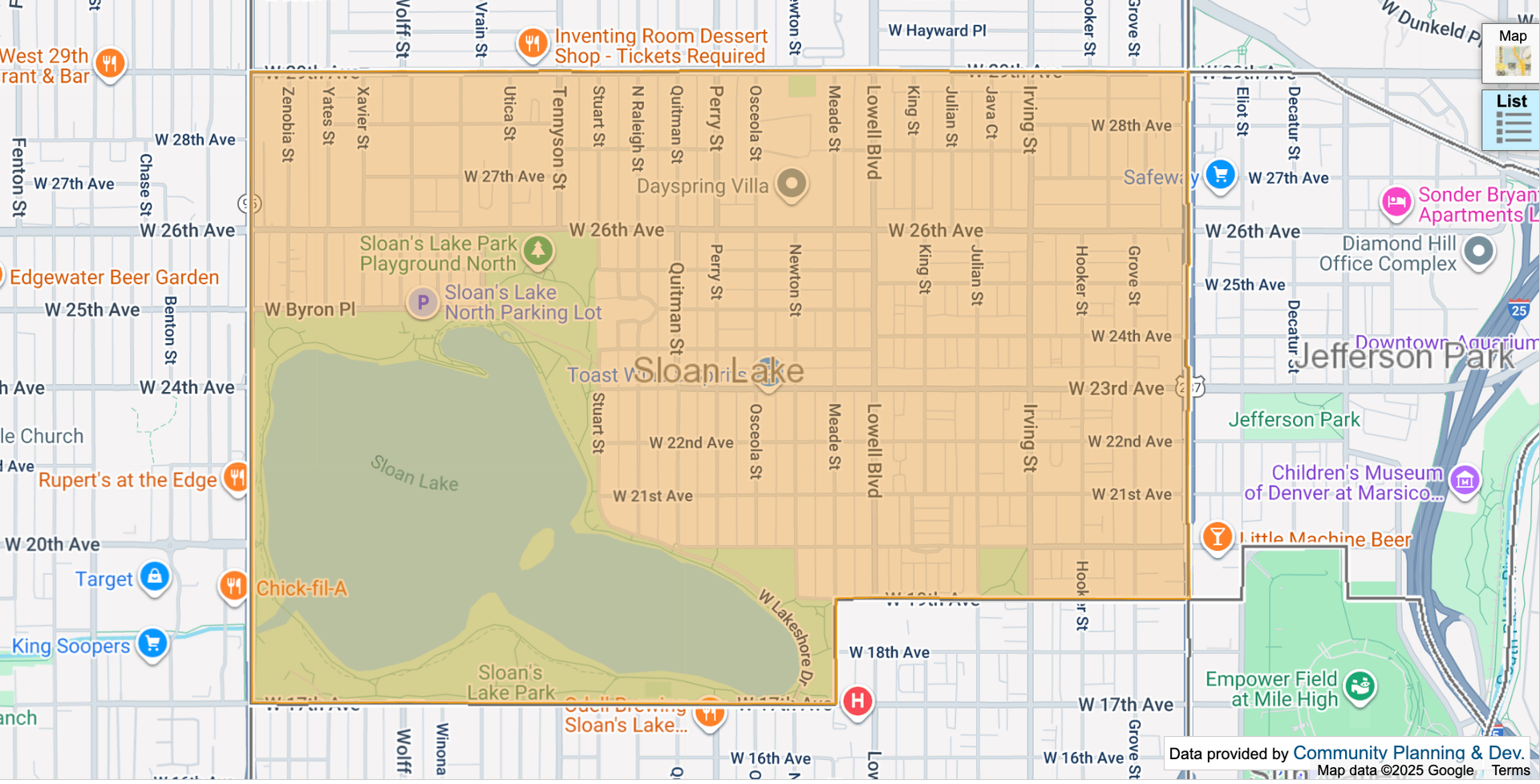
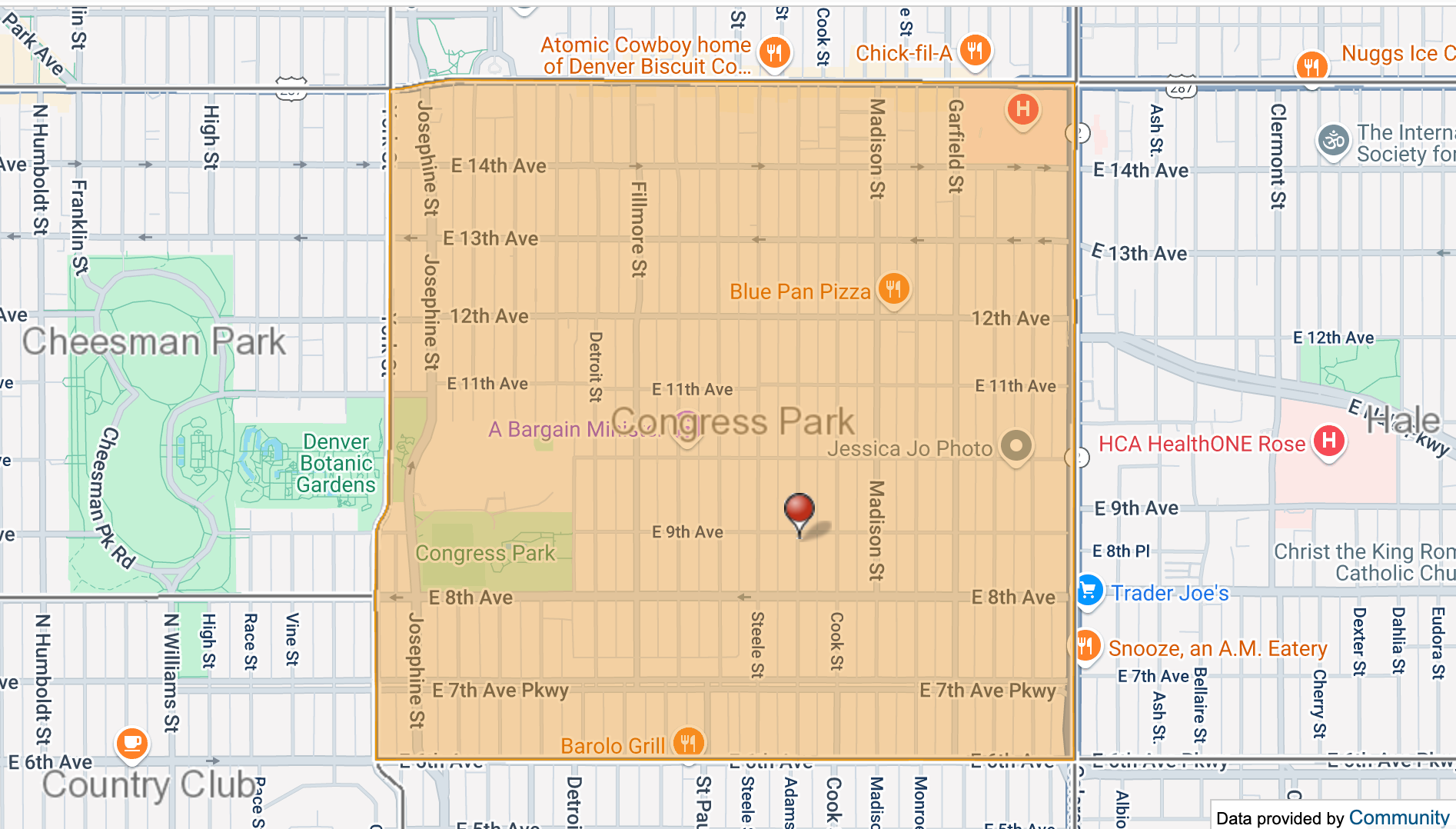
Sloan’s Lake’s official neighborhood boundaries. (Denver Maps)
What Neighbors Are Talking About
Sloan’s Lake residents are holding their breath — literally — waiting for this year’s fish die-off. Every year around this time of the late summer, extreme heat exacerbates the poor environmental conditions in the lake, and hundreds of dead fish bob to the water’s surface.
“It is likely to come this month if temperatures sustain,” Kurt Weaver, executive director of the Sloan’s Lake Park Foundation, told us. “It is the park’s staff that has to clean up the dead fish with nets and garbage bags.”
It’s an all-too-pungent reminder of how serious the situation is for Sloan’s Lake at the moment, as environmentalists sound the alarm over the lake’s warming temperatures, toxic blue-algae blooms, and lack of filtration. To properly address the issues, the lake needs to be drained and dredged, which experts estimate could cost upwards of $130 million and take several years to even get started.
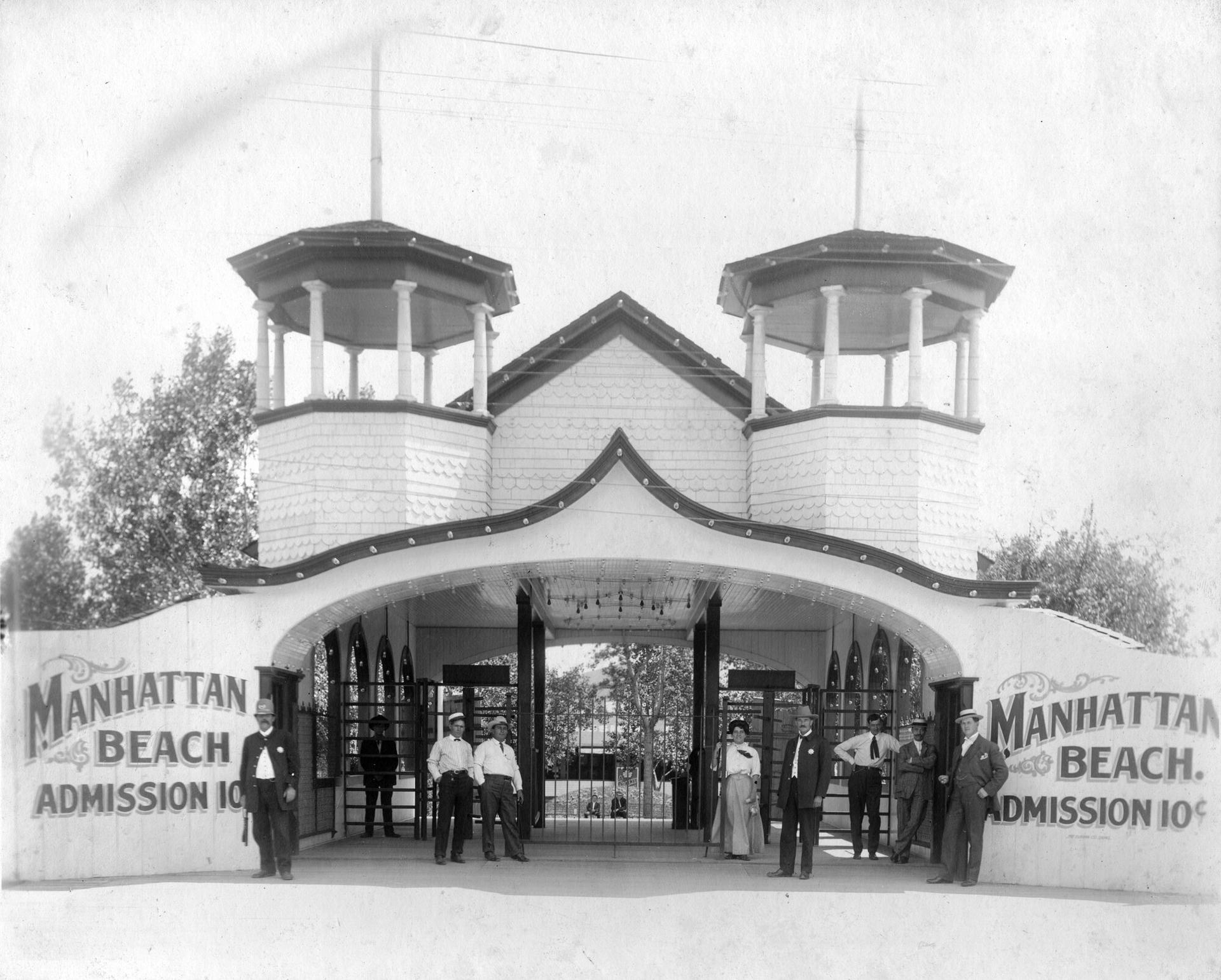
The entrance to Manhattan Beach amusement park, circa 1891-1906. (Denver Public Library Special Collections, X-19530)
A Secret History
The origin of the lake itself is the stuff of local lore. What is known for sure is that prior to the 1860s the lake didn’t exist. Instead, South Golden Road ran right through where the lake sits today, connecting Denver and the City of Golden. Sometime in the 1860s, a farmer by the name of Thomas M. Sloan settled on the land. Legend goes that Sloan unknowingly tapped an underground aquifer while digging a well, and he awoke the next morning to find his land under some 200 acres of water.
But perhaps a more distinct piece of the lake’s past is Manhattan Beach. When the amusement park was constructed in 1891, it was reportedly the largest one west of the Mississippi River, boasting hot air balloons, lake cruises, circus animals, and more. Tragedy struck when a child was accidentally trampled to death by an elephant. (For a long time it was believed the elephant was euthanized and its remains were still buried under the intersection of 20th and Depew — but that was debunked in 2018.) The park mysteriously burned down in 1908, and was rebuilt and rebranded as Luna Park later that year, but unable to compete with Elitch Gardens and Lakeside, the park closed for good in 1914.
🎧 Psst! We dug deeper into the legacy of Manhattan Beach with historian and amusement park expert David Forsyth.