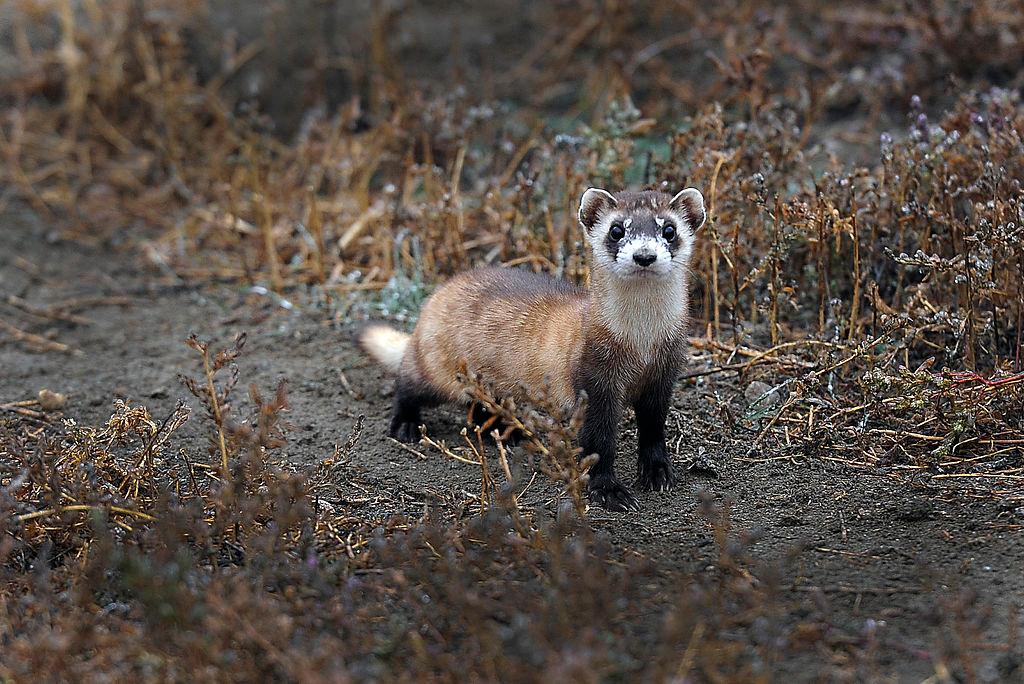
Until serious reintroduction efforts in the 1990s, the endangered black-footed ferret had almost completely disappeared from existence — but over the last two decades, Colorado wildlife officials have played a big part in turning things around. In a major conservation win, CPW biologists reported this month that at least two new litters of black-footed ferret kits were born in the wild near the southeast town of Lamar, Colorado.
How We Got Here
Black-footed ferrets were believed to be entirely extinct until one day in 1981 when a dog in Wyoming brought home a dead one (so the story goes). Scientists were able to breed thousands of ferrets from that rediscovered colony, but the survival rate has remained low because of the slim breeding pool. Since then, scientists have successfully cloned a ferret with the hopes of broadening the genetic stock.
Colorado’s Part in the Conservation Project
Here in Colorado, the small unincorporated town of Carr (near Fort Collins) is home to The National Black-Footed Ferret Conservation Center (founded in 2001). The Cheyenne Mountain Zoo in Colorado Springs also hosts a breeding facility. And in addition to Lamar, Colorado maintains several other release sites, including the Denver-adjacent Rocky Mountain Arsenal National Wildlife Refuge. The ferret kits recently discovered in Lamar are a product of 50 ferrets that were bred in captivity in Carr before being released on a conservation ranch in 2021.
The Numbers Now
Though more than 10,000 black-footed ferrets have been bred in captivity and re-released across the country over the years, officials estimate only a few hundred have survived. The ferrets are impossibly hard to keep track of after release, but thanks to innovative efforts ranging from brightly lit night cams to pet-chip readers, Colorado officials have — for the first time — nabbed proof of survival and reproduction among the ferrets released in Lamar three years ago.
Why It Matters
Black-footed ferrets are an integral part of the food chain, affecting the health and survival of a broad range of animals including golden eagles, foxes, and rattlesnakes. Their survival is also an indicator of the health of the grassland ecosystems they live in.
Fun Ferret Facts:
- Black-footed ferrets are the only ferrets native to North America.
- Their diet almost exclusively consists of prairie dogs. Prairie dog eradication (from people and plague) has played a major part in the ferret’s decline.
- Black-footed ferrets live, eat, and sleep in prairie dog burrows.
- The earliest fossil record of the black-footed ferret is from approximately 100,000 years ago.
- Female black-footed ferrets are called “jills” and males are called “hobs.”