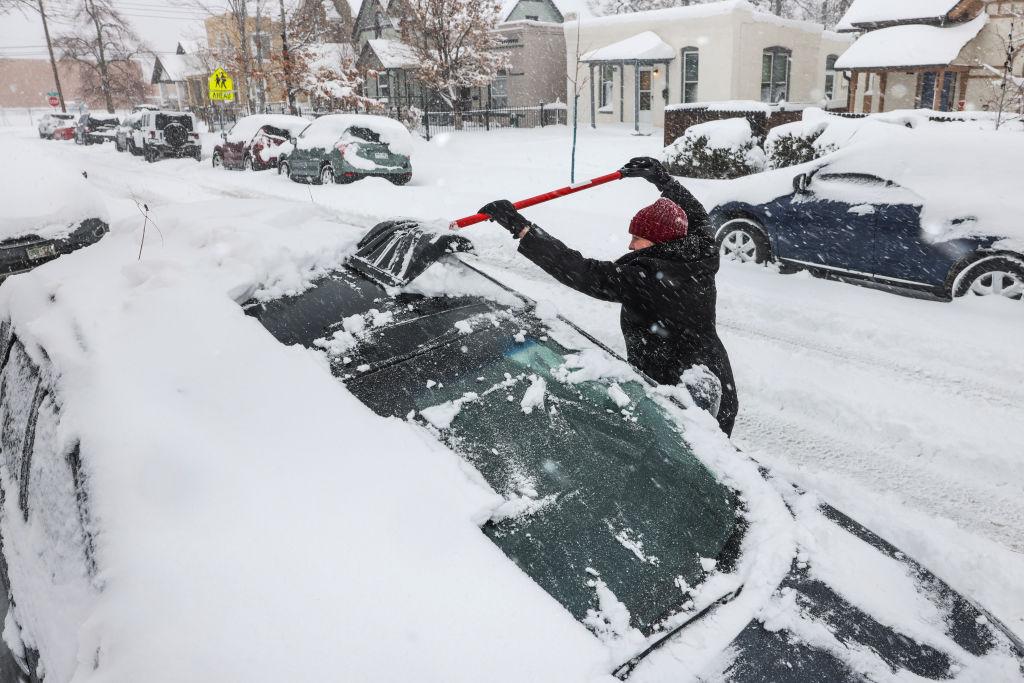
The National Oceanic and Atmospheric Administration’s Climate Prediction Center recently announced that La Niña is likely to emerge in the next month and last until sometime between January and March 2025. So, what is La Niña exactly, and how would it affect Colorado weather?
What is La Niña?
In a nutshell: La Niña is one of two abnormal climate phenomena that affect the temperature of the Pacific Ocean near the equator. Normally, trade winds push warm ocean currents west towards Asia, allowing colder water to rise to the surface near the Americas. During La Niña, those trade winds are stronger than usual. In the United States, this can cause droughts and warmer winters in the southern part of the country, and cooler than usual winters in the north. La Niña can also lead to a more severe hurricane season.
Both El Niño and La Niña occur every two to seven years on average and can last from several months to multiple years. El Niño (when warmer ocean temperatures reverse the direction of trade winds) is more common than La Niña.
- ☃️ Related: The Old Farmer’s Almanac predicted a slightly warmer and very snowy winter for Colorado, but how accurate is it?
How La Niña Affects Colorado Winters
Statewide effects of La Niña are inconsistent, but it does typically mean less than average snowfall. In Denver, six of the last seven La Niña events have resulted in less snow.
La Niña is also arriving later than usual (it tends to arrive in late summer) and CPC is predicting a “weak” version of the phenomenon, which makes winter weather predictions even more difficult. Two of the last three late-arriving, weak-to-moderate occurrences of La Niña brought more snow to Colorado, while the latest one (2017-2018) marked one of the state’s driest winters.
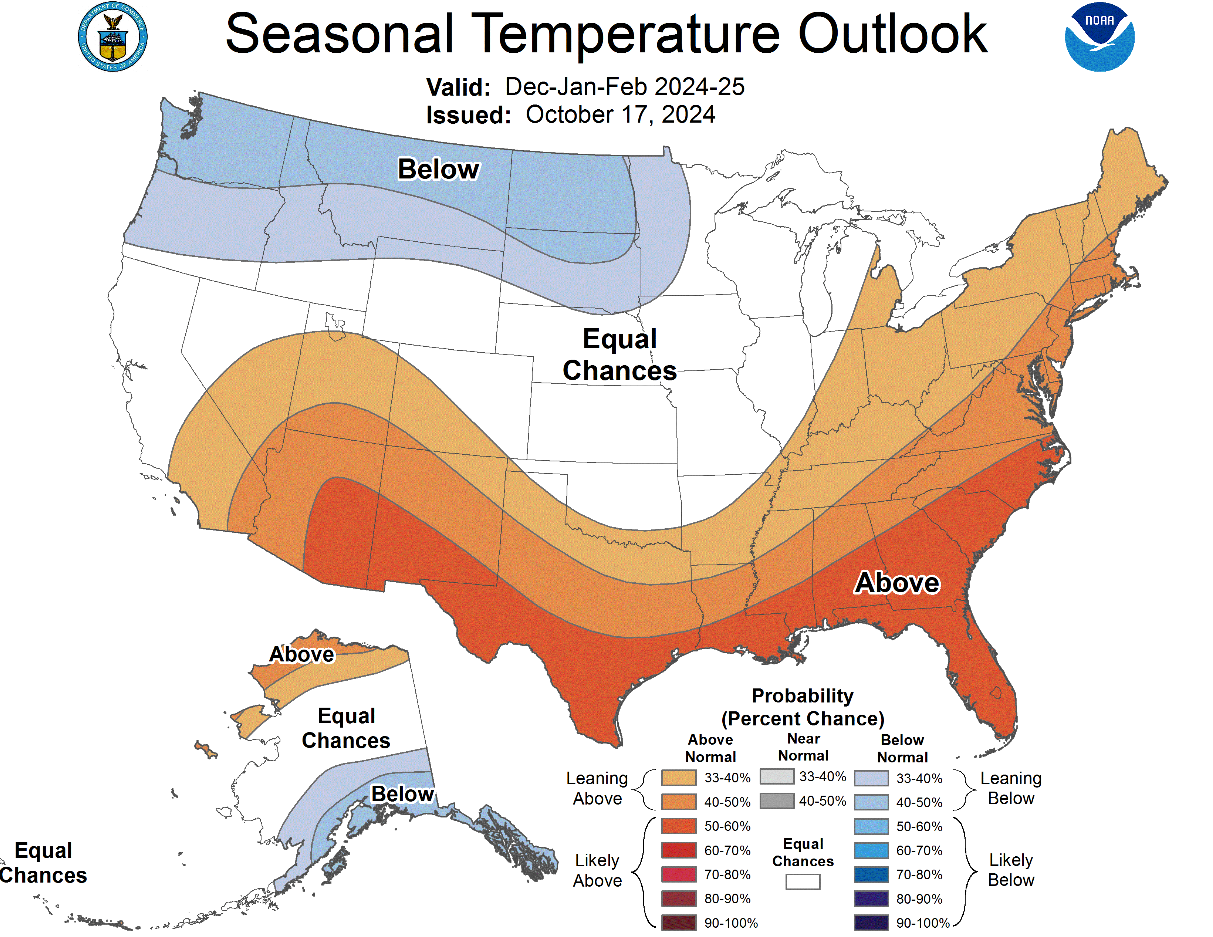
A map of winter temperature predictions for the United States. (Courtesy of the National Oceanic and Atmospheric Administration)
So, what does that really mean? In a weak La Niña year, trends suggest that Denver and much of the Front Range will see less than average snowfall, while parts of the Eastern Plains and central Colorado could see more snow than usual — potentially good news for skiers and snowboarders.
Experts also note that climate change is exacerbating the effects of extreme weather, adding that the short-term cooling effects of La Niña do not change the long-term rising of global temperatures. One thing is for use, Denverites will still be making use of our winter gear this coming season.