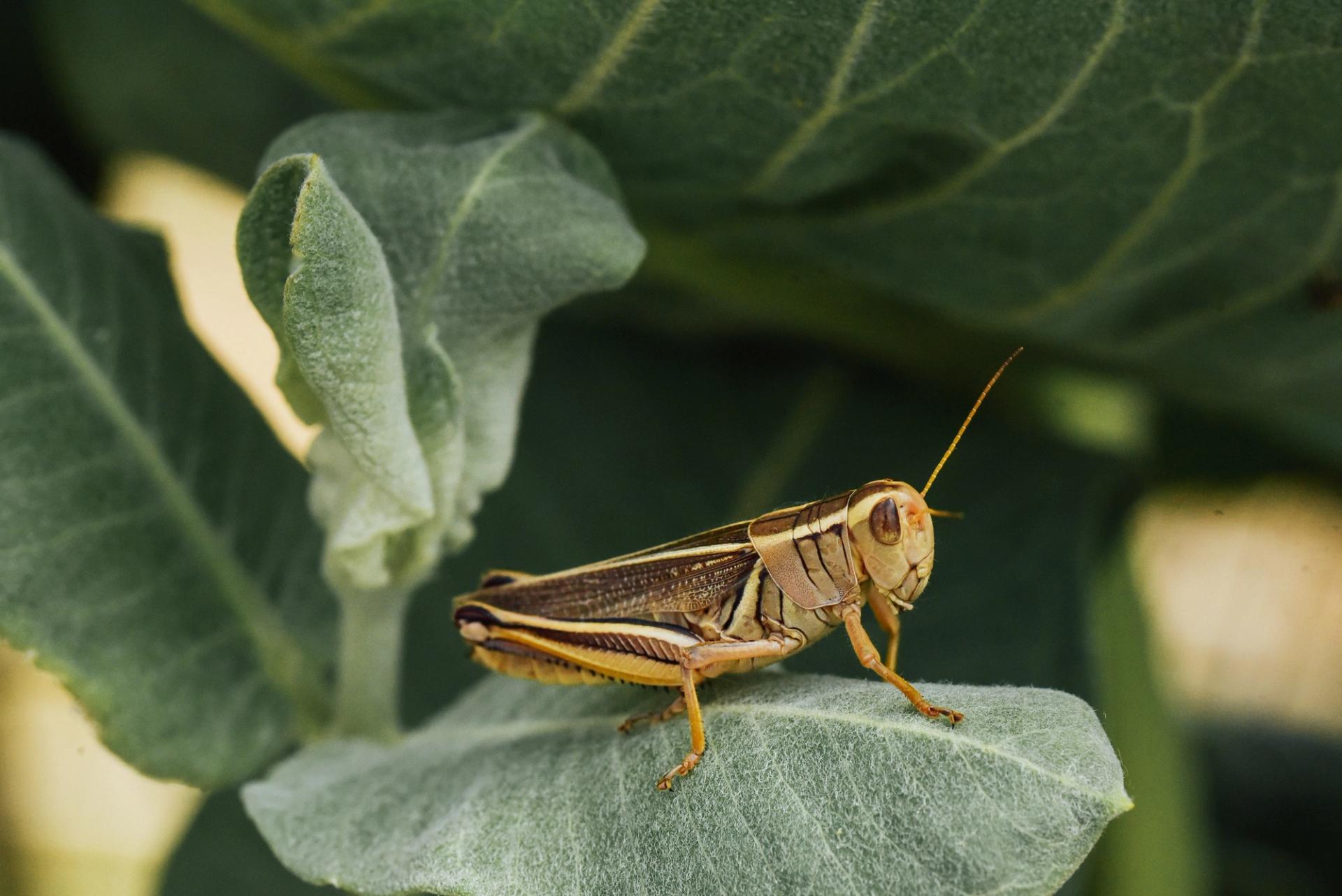
If you feel like your lawn (and garden and home and personal space) is under invasion by grasshoppers, you’re not alone. They’re bad this year — like really bad. Here’s what’s up:
Yes, The Grasshoppers Are Worse This Year
Local insect experts have confirmed it. Why? This summer’s extreme heat is likely one key factor. Grasshoppers aren’t all that bothered by scorching temperatures like many other bugs. So while fellow creepy crawlies are burrowing deep underground to cooler conditions, grasshoppers get free reign.
What’s The Big Deal?
While grasshoppers are a key part of the natural ecosystem, they feast on the plants, crops, and hard work of farmers and gardeners. A season like this can absolutely decimate the livelihoods of those in the agricultural industry through damaged crops, delayed harvests, and the cost of mitigation efforts.
What’s To Be Done About Them?
That’s tricky — especially because Colorado is home to more than 100 different species of grasshopper that all respond differently to mitigation efforts, making it nearly impossible to broadly target them all. Poisons and insecticides are ill-advised because of the negative impact they can have on other players in the ecosystem, like birds and pollinators. The success of DIY remedies, like spraying garlic solution and pepper oils or dusting cinnamon on your crops, varies widely. Most experts recommend installing row covers and landscape netting, then hoping for the best 🤞
Count Your Blessings
This isn’t the first time Colorado has witnessed an especially nasty grasshopper season. In 1937, Colorado saw a grasshopper plague “of biblical proportions” so bad that the National Guard was called in, armed with flame-throwers and troops of hopper-hungry turkeys. Below is an image of a Colorado Springs storefront at the time 😬
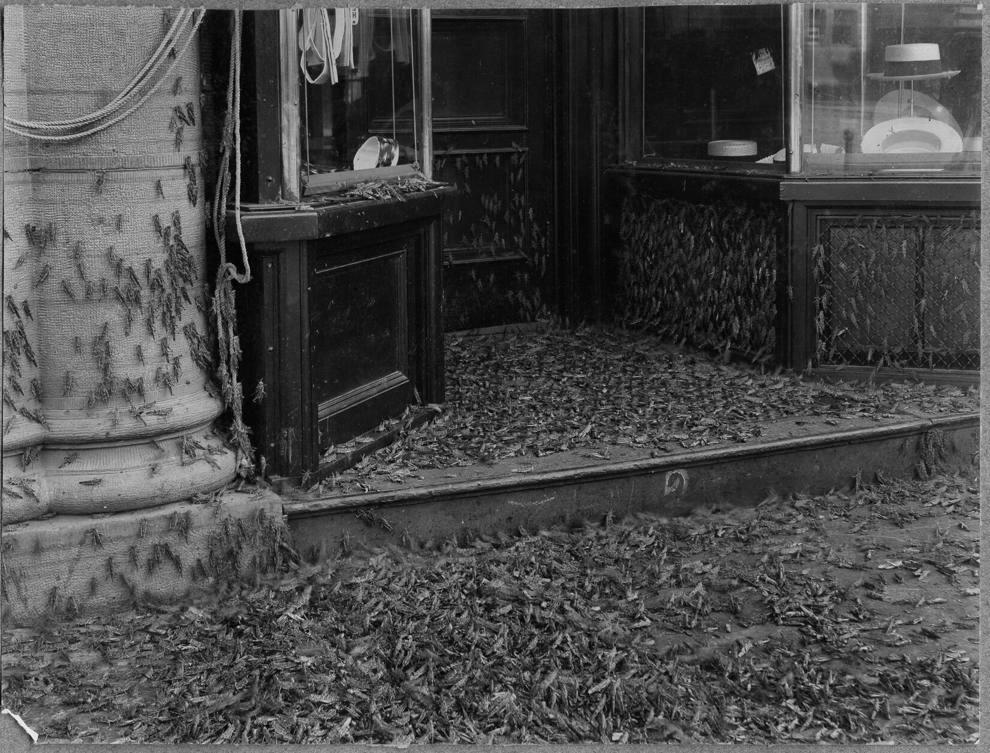
Grasshoppers swarm a downtown Colorado Springs storefront in summer 1937. (Credit: National Guard archives)