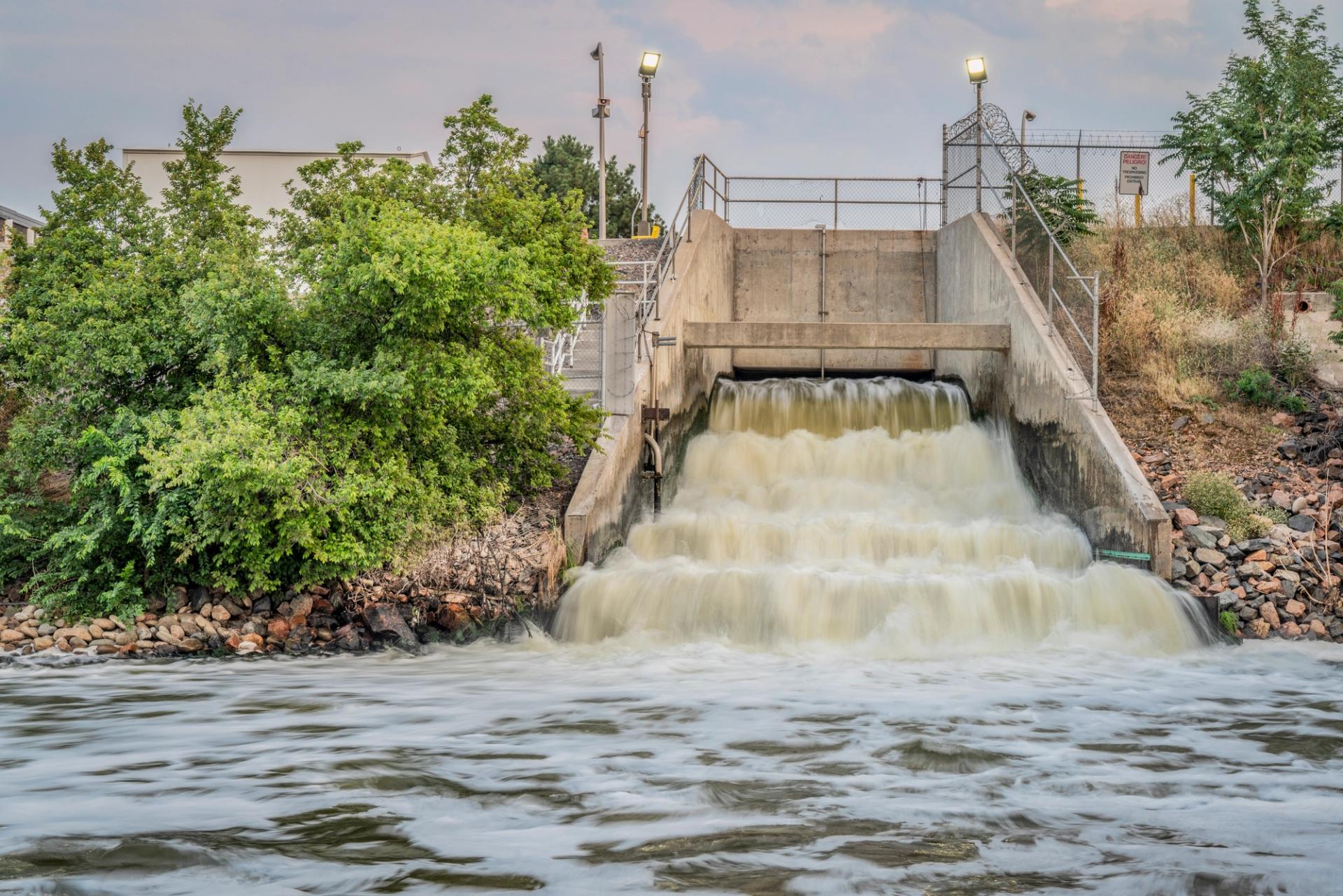
Beginning way back in 2006, then-Mayor John Hickenlooper unveiled Greenprint Denver, a guiding document for the city's climate goals. Mayor Michael Hancock added his own, promising more than a decade ago that the Mile High's creeks and rivers would be swimmable by 2020. Though a lot of work has been done to improve our waterways, the South Platte River is still not safe to swim in. Here’s why.
Why It’s Still Dangerous
According to Jon Novick, an environmental administrator with Denver’s Department of Public Health and Environment, the South Platte was treated like a dump for a long time. "There's kind of this legacy of just considering the river to have little value," he said. "Everything that was built had its back to the river."
But even with changing attitudes and upgrades to wastewater facilities that limit what goes back into the river, there are other challenges that make the South Platte a less-than-ideal recreation spot. Climate change, growing populations, and the difficulty of removing E. coli from a body of water once it’s there all contribute to the health issues of the waterway.
The Bottom Line
Because of industrial runoff, bacteria including E. coli (which can be at especially dangerous levels during the summer), and other pollutants, the Denver Department of Public Health and Environment does not recommend swimming, wading, or playing in the South Platte River and other lakes and streams.
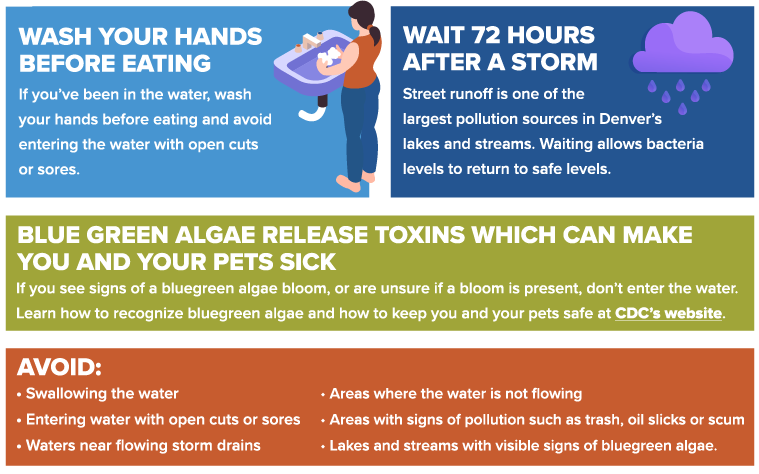
Tips on how to stay safe if you do choose to go in the city’s lakes or streams. (Denver Public Health and Environment)
How To Be Proactive
Keep trash, bodily discharges, and dog poop out of the water. And even when you’re not near a waterway, don’t dump things in storm drains. As Casey Davenhill, executive director of the Colorado Watershed Assembly, tells The Denver NorthStar: “A lot of times people think those drains go to a treatment plant, but they don’t. The river is the treatment plant.”