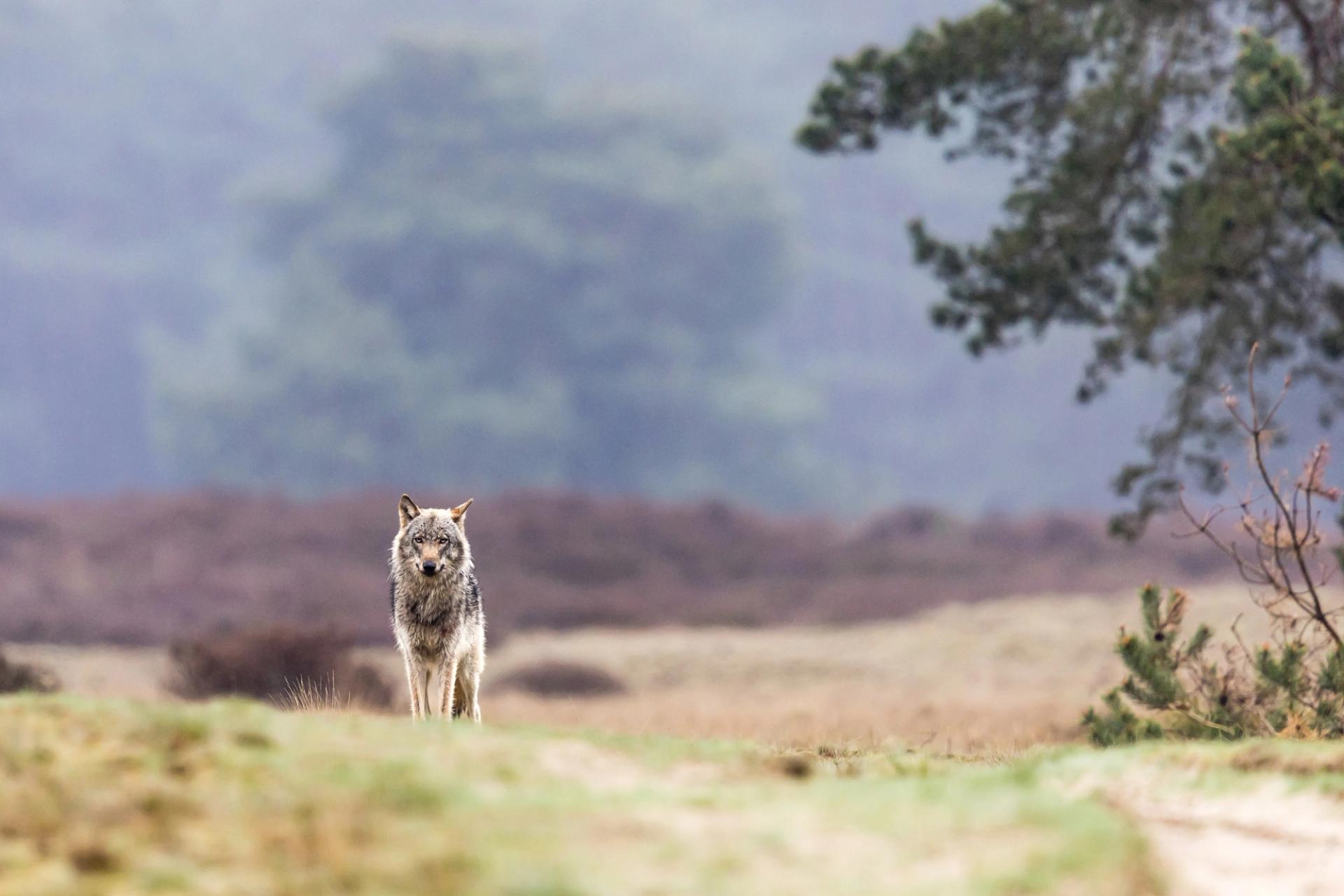
The formal reintroduction of wolves to Colorado’s wilderness has been dominating headlines and newsfeeds for months. The historic and controversial state initiative culminated in the highly publicized release of 10 wolves in Grand County last month.
As state officials, local ranchers, and wildlife advocates wait with bated breath to see how things pan out, others are wondering: what does this mean for me? While it’s pretty unlikely you’ll ever run into a wolf on your run-of-the-mill Rocky Mountain hike — you never can be too safe. Here’s what you should do if you encounter a wolf in the wild.
Give it a wide berth
Wolves have little interest in interacting with humans. The best thing you can do if you’re face-to-face with one is provide it with an easy escape route. A mama wolf with her pups is likely to be more on the defensive, as is a wolf in the middle of a meal. The presence of another canine — aka your aussie doodle — could also invoke aggressive behavior.
Be assertive, not submissive
Like with wild cats, you’ll want to appear large and imposing if faced with a wolf. Stand tall, raise your arms, or climb onto a rock. Talk calmly, firmly, and loudly. Try to put a barrier between yourself and the animal — but continue to maintain eye contact. Do not turn your back and run — this could trigger the wolf’s instinct to chase you.
Take preventative measures
Whenever you’re in the territory of a predatory animal you should carry a can of bear spray or an air horn as non-lethal forms of protection against dangerous wildlife. Keep your dog on a leash or in close proximity. And always be aware of your surroundings.